Reportage
The travel day: what actually happens between the terminal and take-off
Arrival, baggage, security, passport control, apron, boarding, cabin: how a private departure with a dog actually unfolds — step by step, without the gloss.
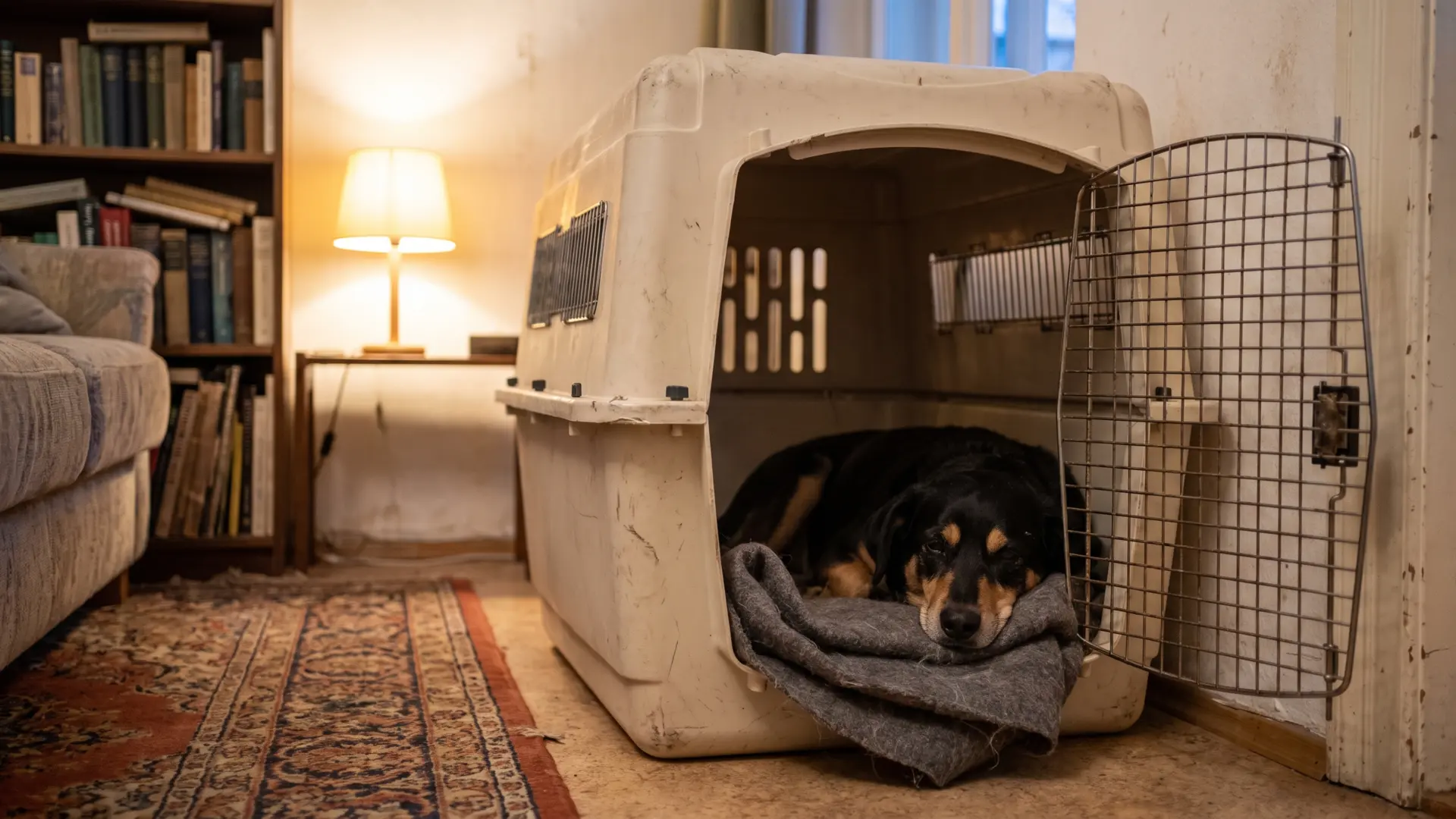
Most mental images of private flying come from advertising: airstairs, sunset, somebody in sunglasses. Those pictures say nothing about what the day is actually made of.
Because the remarkable thing about a private departure isn't the luxury. It's the absence of distance. Between the moment the car stops and the moment you're sitting down there are a few steps and a few doors — and for a dog, that is the entire difference.
Before the day
A travel day that goes quietly is built in advance.
By then the paperwork has been checked, not hopefully assembled: vaccination record, identification, import permit, official veterinary certificate. The dog has been registered with his breed, weight and size, so that the question of which aircraft was answered beforehand rather than at the terminal. Who is on board is settled. Whether a crate is required has been resolved.
It sounds unspectacular. It is the reason the day itself has so little to it.
Arrival
Private aviation terminals sit away from the main hall, often on their own access road. There's no drop-off queue, no line, no departure board listing forty destinations.
You stop, get out, the luggage is taken. In private aviation, fifteen to thirty minutes before departure counts as a normal arrival time — a figure that sounds absurd in scheduled terms and here simply follows from the fact that a terminal handling a few dozen travellers works differently from one handling twenty thousand. How much time is allowed for your trip is something your concierge tells you; for international departures and with several animals on board it is usually more.
For a dog the day therefore starts differently already. No car park, no escalator noise, no twenty minutes at a desk surrounded by suitcases.
The room before the flight
What follows isn't a gate. It's a room with seating, where the other travellers wait.
On flights where everyone has a dog, that has a practical side effect one guest described in her account: the dogs meet each other here, calmly, with space — rather than first encountering one another in a confined cabin. Anyone who has watched two unfamiliar dogs meet in a corridor knows how much depends on where the first meeting happens.
Security
There is a security check, and this is a common misconception about private flights. Identity is verified, baggage is screened, passenger data is submitted to the authorities in advance. The difference isn't that nothing is checked. It's where, and with how many people at once.
For dog owners there is a detail here that almost nobody anticipates: just as people remove their belt, dogs have to have their collar and lead taken off for screening. A brief moment in which a dog is off the lead in an unfamiliar place. Knowing it in advance means holding him close rather than reacting in surprise.
Passport control and the apron
Then border control — for international departures, inside the building or immediately beside it, not in a hall.
And then the part that stays strange even after many flights: you are driven across the apron in a small bus. Through the window, aircraft. The drive takes a few minutes and is the moment most travellers realise this day is not running the way they had pictured.
Boarding
There is no air bridge, no boarding groups, no announcement. There are steps.
For large dogs that is a genuine question rather than a formality. Aircraft stairs are steeper and narrower than domestic ones, and the treads are sometimes open. Some dogs walk up without hesitating. Others need help, and crew and handling staff are prepared for that — provided it was discussed beforehand. It's one of the things worth mentioning when you register the dog.
In the cabin
A business aircraft cabin is smaller than advertising suggests, and lower. It is also quieter than an airline cabin: fewer people, fewer announcements, no trolleys.
Where the dog settles depends on the aircraft, the operator and his size. Often at your feet, sometimes on a blanket on the seat beside you. For take-off, the operator's rules apply — again, the crew tells you beforehand, and again, it isn't a question to ask for the first time on the day.
What often surprises owners: take-off is the least eventful part for most dogs. The noise rises briefly, the aircraft tilts, and then it gets quieter. Many animals fall asleep during the climb. The guest who flew to Dubai with her pug in 2025 describes exactly that: the dog lay at her feet as though it were the most ordinary thing in the world.
During the flight
A flight to Dubai from central Europe takes around six hours. For a dog that is long enough that water, movement and relieving himself stop being theoretical questions.
There is water on board, in sensible amounts and not all at once. Movement in a business cabin means standing, stretching, a few steps — the space allows no more, and a dog who is lying down usually needs no more. For everything else, what owners know from long car journeys applies: the walk before departure matters more than any measure taken in the air.
What is more noticeable in a small cabin than on an airliner is the mood of the people in it. A nervous owner is the clearest piece of information in the room as far as a dog is concerned. It is one of the reasons that calm processes on the ground decide more about a flight than anything that happens in the air.
Arrival
At the other end the sequence repeats in reverse, only shorter. Steps, apron, terminal, formalities.
Exactly how the dog's entry formalities run depends on the arrival airport, the handling agent and the route — that is the part the operator and handler settle in advance. What doesn't happen here is the hours-long separation that belongs to the cargo route: the dog leaves the aircraft with his person.
When something slips
Private flights don't always leave on time either. Weather, a technical check, a clearance, a slot — the reasons aren't fundamentally different from those in scheduled aviation.
What is different is where you wait. A delay at a private terminal usually means the same sofa, the same handful of people, and a dog who stays lying beside his owner rather than standing in a crate in a handling area. The option of stepping outside for a few minutes generally still exists too — which on the cargo route it does not, from the moment of drop-off onwards.
It is still worth asking the question in advance. How long can your dog wait comfortably? Do you have water and his blanket with you rather than in checked baggage? And who do you reach if departure moves by several hours?
Unspectacular questions. They are also the difference between a delay you sit out and one that tips the whole day over.
What the day doesn't solve
A private departure makes no document unnecessary. The vaccination has to be valid, the permit in place, the certificate issued inside its window. No terminal in the world replaces that chain.
Nor does it turn an anxious dog into a relaxed one. It removes some of the triggers — the being alone, the volume, the duration, the repetition at a connection — but it doesn't change his nature.
And it doesn't make the day weatherproof. A private apron in August is still hot, and a dog who regulates heat poorly remains a dog who regulates heat poorly.
What's left is a journey that, for the animal, consists of very few events: a car ride, a short walk, a flight beside his person. It isn't a remarkable experience for a dog. It's an unremarkable one — which is exactly the point.
Settle the sequence for your route
Which terminal, how much lead time, what applies to your dog at take-off: all of that is fixed before the journey, not on the day. Ask about it before you book.